EP01: Creativity over Compute: The Case for Human-Centric Design
Why AI can't replace human creativity: the philosophical debate, real business failures, and practical frameworks for designers to get ahead in 2026.
Date
Category
Author
Reading Time
The anxiety and excitement for AI in the creative community is real. It’s a weight on all of our shoulders. Every day comes a new model, feature, company, and the list goes on. Most of us have never seen technology move at this pace. We’re stuck in a working world where we are both limited in our ability to adopt these tools and have little free time to adapt our minds. There’s no doubt the world and the economies around us are going through a massive evolution. Filtering out the fluff from reality is getting harder by the day.
Who are we?
OPEN SESSION is a design company. Our mission is simple: help the world make the most of design and technology. Our goal is to gain your trust. We promise to avoid the hype and share practical frameworks and design assets to help elevate both your business and your creative practice.
The company was founded by two creative partners. I'm Karim Bouhdary, a creative technologist and designer who bridges the gap between design and engineering, with experience at companies like Google, SAP, and Salesforce. Morgan MacKean is a strategist and creative director focused on the intersection of design, technology, and brand identity. Over the years, Morgan and I have developed deep expertise in design systems, brand identity, and content production.
We promise to provide you with curiosity, solutions, respect, connection, and transparency.
How did we get here?
I quit my high paying corporate job over 6 months ago to give myself space to engage with these tools and rethink the impact on society. I spent intentional time with my friends, family, and the community to learn more about this evolving world. This was a voluntary transition.
In this time, we’ve used hundreds of millions of tokens, “vibe coded” 5+ million lines of code, and generated hundreds of thousands of images and videos while also building multiple brands from scratch. I’m incredibly grateful for our first clients who have trusted us to reimagine their brand identity and creative production process. We’re betting on ourselves and investing in a different kind of future. A world that's focused on empowerment, community, and exponential creativity.
Why Creativity is Your Superpower
The key ingredient is imagination. Wikipedia defines creativity as “…the ability to form novel and valuable ideas or works using one's imagination”.
Our imagination is the “production of sensations, feelings, and thoughts informing oneself.” In order for any AI model to exercise creativity, it would need to have a sense of self and consciousness. The question of whether AI can possess a sense of self remains one of the most contested issues in contemporary philosophy. This is the type of conversation you don't see in the news, but instead you’d have as a philosophy major at Stanford. Based on our research, there are two trains of thought on this subject that we relate to.
1. The Hard Problem of Consciousness
David Chalmers coined the term in 1994. This philosophical argument centers around the idea that consciousness isn't merely about information processing; it's about having subjective, felt experiences called qualia. Conscious experience is a widespread phenomenon present in many animals. The most common example of this world view is centered around a peculiar animal that lives in the dark, the bat. Thomas Nagel argues that while a human might be able to imagine what it is like to be a bat, it would still be impossible to replicate a bat’s consciousness. Many animals, like bats, possess a radically different sensory apparatus from humans. While humans perceive through vision, bats navigate and perceive the world through echolocation. Even if we collected all of the data about a bat’s life and somehow turned it into an immersive virtual experience, we would never be able to know what it’s like to be a bat since we perceive the world differently. The same train of thought would apply to machines and AI models.
TL;DR: Machines lack human sensory processing, so they cannot be conscious. Even if we captured every data point from a human's entire life, a model would never truly understand what it's like to be human.
2. The Substrate Independence Question
Another radically different scientific philosophy centers around Functionalism. This thesis states that each mental state—belief, desire, pain—is defined solely by its functional role, which comes down to sensory inputs and behavioral outputs. It evolved from Alan Turing's work, you may recognize the name as Benedict Cumberbatch played him in the movie "The Imitation Game". Nick Bostrom founded the Substrate Independence framework. He's world-renowned for his work on existential risk, human enhancement ethics, and super-intelligence risks. Bostrom argues that minds and consciousness aren't tied to any particular material—the same conscious experience could exist in a biological brain, a computer, or something else entirely. This is the exact opposite worldview of David Chalmers.
TL;DR: Human experience can be fully adapted to machines. In theory, Bostrom believes that if an entire human's experience could be captured as data points, we could hypothetically map each mental state to sensory inputs and behavioral outputs—then transfer them to silicon chips and robotics.
Hundreds of philosophers and countless experiments have explored this subject, but they all come down to the same question: can artificial intelligence develop consciousness? We've presented two very different worldviews. What's ironic is that the founders of Open Session are actually divided on this topic. I (Karim) lean toward Bostrom's thesis, mainly due to my analytical and logical mind. While Morgan favors Chalmers' theory, which makes sense given that she's the more creative and free-spirited of the two of us. There is no right answer, and that's what makes these conversations so intriguing—all we can do is wait and see what the world has to offer.
Regardless of our differences in worldviews and theories, Morgan and I agree on one thing: for the foreseeable future, human creativity will be a significant differentiator for businesses and creatives. It's unlikely that in our lifetime we'll witness Bostrom's world come to life. Even though it's hypothetically possible, the amount of data and infrastructure required is probably not within the exponential curve we'll experience in our lifetime.
Defining Creation vs Creativity
Real creativity isn't just mixing and matching patterns. It's rooted in three things AI fundamentally lacks: self-disclosure, embodied existence, and genuine agency. Think about what happens when you create something meaningful. You're revealing your inner life, your experiences, struggles, and perspective. We argue that this is essential for creativity because it lets others understand who we are and creates a sense of human connection. AI has no self to disclose, no inner life to reveal. That act of self-disclosure is what makes art resonate. Let’s further illustrate the importance of this principle with art itself.
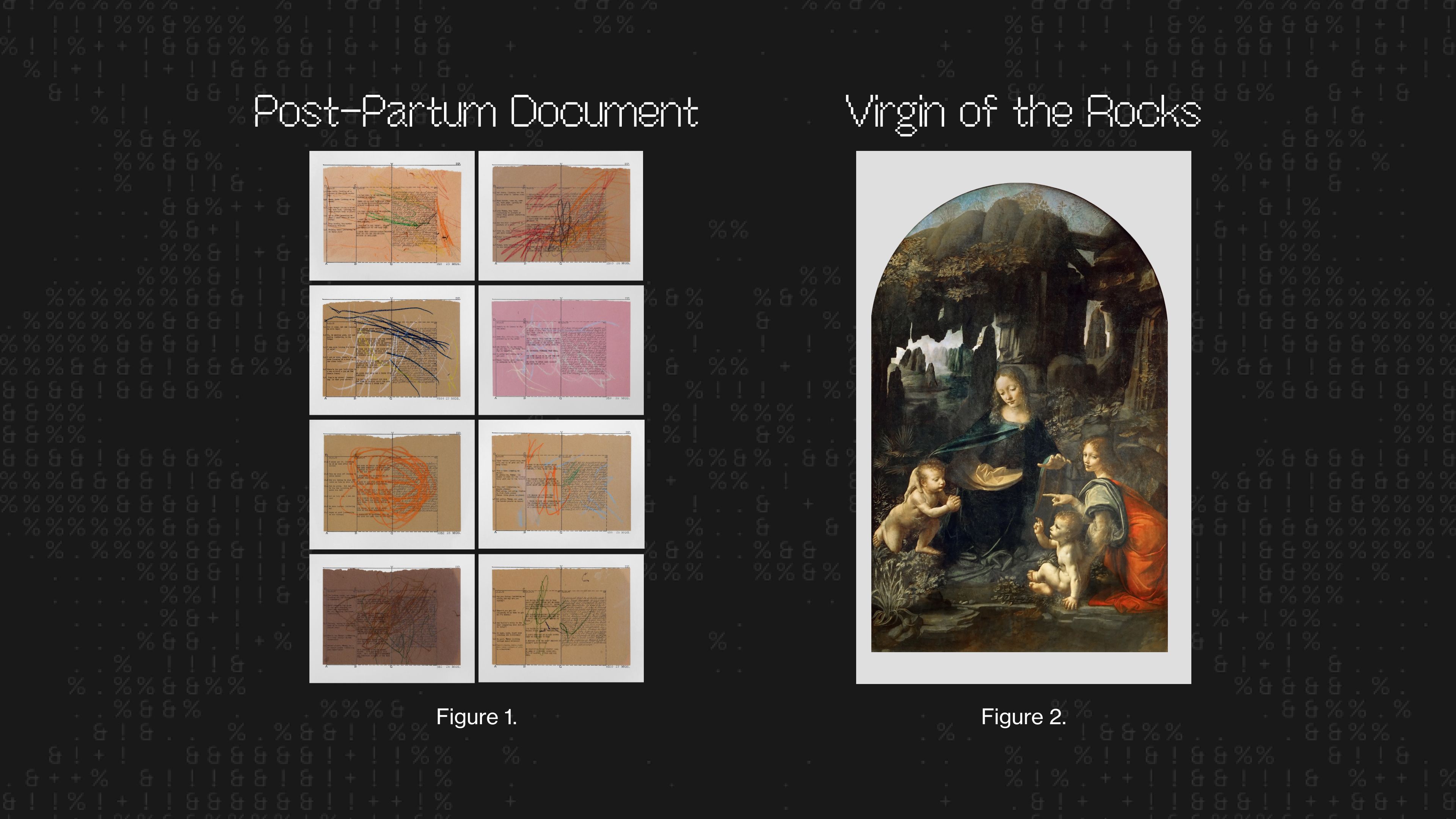
Figure 1: [Tate Gallery] Figure 2: [Wikipedia]
Consider the difference between these two artworks about motherhood: Leonardo da Vinci's Virgin of the Rocks versus Mary Kelly's Post-Partum Document. Da Vinci's painting fits within Renaissance religious traditions, responding to cultural conversations of his time. On the other hand, Kelly's conceptual work features framed, transcripts colored on by her child to convey the raw emotional complexity of motherhood from her own lived experience. As Dr. Milena Ivanova at Cambridge points out, Kelly's work communicates authentic maternal experience in a way that Da Vinci's idealized vision never could. Both are art because human creators used their imagination. Each artist's imagination was shaped by their unique experiences, sensations, feelings, and thoughts—all of which informed their work.
An AI generating a "Virgin of the Rocks-style painting" participates in none of this—it has no position, no history, no stakes. Just because you are using AI to create based on a certain style doesn't mean that the model is inherently creative. You, as the human, are deciding that style based on your own lived experience and desired output.
TL;DR: There's a massive difference between creating and creativity. Reflect on what you've seen in the media about AI workflows. People often push the narrative of automating entire marketing campaigns or building websites with "one-shot" prompting. But when we outsource creation to a machine, are we really being creative ourselves?
AI Researchers Admit What's Missing
Outside of philosophers, it's also important to consider the researchers who have led the development of the world's most popular large language models. Yann LeCun, Meta's former Chief AI Scientist and Turing Award winner, states bluntly that current large language models "can't reason, can't plan"—foundational capabilities for genuine creativity.
François Chollet further emphasizes this point. François is a former Googler and world-renowned for his creation of Keras, a deep learning library powering much of modern AI. He discovered that large language models (LLMs) can solve certain ciphers like transposing letters because they have essentially memorized patterns from frequent exposure on the internet. However, these models do not truly synthesize novelty. Simply put, LLMs struggle with new problems because they lack genuine program synthesis and abstract reasoning abilities.
The critical distinction is abstract reasoning—our ability to extract principles and apply them to entirely new contexts. LLMs navigate learned patterns within what's called latent space (see diagram above), always searching for statistically similar examples from their training data. Humans, however, can understand why something works and use that understanding to solve problems they've never seen before. When Chollet tested models with a simple letter-shift cipher using an uncommon pattern, they failed completely—not because the task was hard, but because that specific pattern wasn't common in their training data. If you've tested AI capabilities yourself, you've likely hit this wall; if you haven't, try it yourself.
TL;DR: LLMs cannot reason or process novel ideas, a core element of creativity. The people building these systems understand their fundamental limitations better than anyone.
Brands & Business Pay the Price
Real-world failures tell the story. Organizations are laying off tens of thousands of people and redirecting capital toward AI tools. But where are the results? When used irresponsibly, AI has three main detrimental impacts on businesses: ROI, brand equity, and critical thinking.
First, let’s unravel the short-term negative ROI impacts. The MIT GenAI Divide: State of AI in Business 2025 report found that 95% of generative AI pilot programs at large companies fail to produce rapid revenue growth or measurable impact on profit and loss. This conclusion came from analyzing $30+ billion in investment across 150 business leaders, 350 employees, and 300 public AI deployments. The study revealed several key findings…
The central problem is the "learning gap"—organizations fail to adapt AI tools to fit their workflows. Most failures stem from flawed integration, not poor model quality.
Companies often rush to build internal AI solutions, but these succeed far less than vendor partnerships. Purchased, specialized AI tools succeed about 67% of the time, while internal builds work only a third as often.
Effective AI adoption happens when line managers—not just centralized innovation teams—drive change, and tools integrate deeply into evolving tasks.
More than half of generative AI budgets go to sales and marketing, but the biggest ROI comes from automating back-office operations: eliminating outsourcing, reducing agency costs, and streamlining processes.
One of the key findings around budgets going toward sales and marketing directly relates to our second point around brand equity. Brand equity is the value and strength of a brand as perceived by customers and the marketplace. It's the premium a company can command for its products or services based on brand name, reputation, and emotional connections with consumers. Trust is a core ingredient of brand equity. When a business loses your trust, you immediately change how you relate to that brand—both internally and externally. Let's examine two examples of how companies have eroded their brand equity…
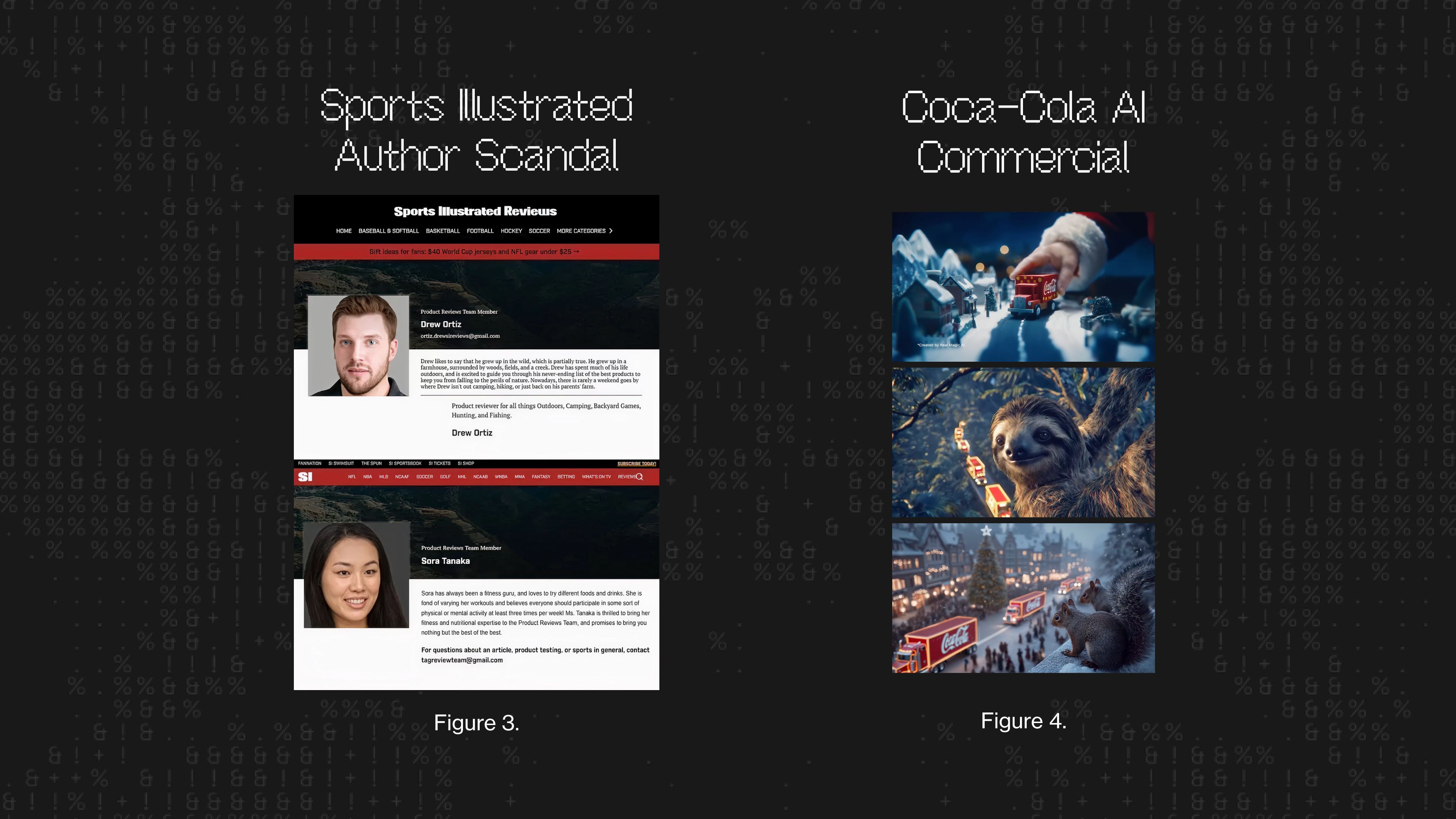
Figure 3: Daily Mail Figure 4: Coca Cola Youtube
Sports Illustrated published articles under fake bylines assigned to AI-generated personas—complete with synthetic headshots and fabricated backstories. An investigation by Futurism revealed that authors like "Drew Ortiz" and "Sora Tanaka" don't exist. Their profile photos came from AI headshot marketplaces, and their biographies were entirely fictitious. Multiple sources confirmed that both the author profiles and the articles themselves were AI-generated.
Coca-Cola's AI-generated ad caused mass controversy during their 2024 Christmas campaign. They hired an agency that used AI to remake their iconic 1995 "Holidays Are Coming" commercial—entirely synthetic people, trucks, and landscapes. Christmas ads are integral to Coca-Cola's identity, and it was clear that many of their biggest supporters felt the AI content created an emotional disconnect.
Both scenarios show AI used irresponsibly for content creation and commercial production. While cost savings and positive ROI might exist from a purely capitalist perspective, the negative impact on brand equity is difficult to measure. For Sports Illustrated, an agency may have produced 100 fake AI articles that initially boosted subscribers or engagement. However, once the deception was revealed, the resulting loss of subscribers and trust is nearly impossible to directly attribute to that single incident. The same applies to Coca-Cola. Their commercial might have cost $500K instead of $2 million, while still achieving favorable reach and engagement. But there's no way to know how many customers switched to Pepsi or reduced their Coke purchases because of that lingering memory.
Last but not least, let’s talk about the negative impacts on critical thinking… A small yet significant study performed by the MIT Media Lab revealed that excessive reliance on AI-driven solutions may contribute to "cognitive atrophy" and the shrinking of critical thinking abilities. We particularly appreciate how Tina Grotzer, Harvard Principal Research Scientist, frames this: "We're better than Bayesian." Bayesian reasoning refers to a statistical approach where decisions are made by calculating probabilities based on prior knowledge and observed data. While powerful for pattern recognition, this method struggles with true novelty and context-dependent judgment. This directly reflects the discovery from our friend François Chollet. Humans can make intuitive leaps, recognize meaningful exceptions, and adapt to unprecedented situations in ways that purely statistical models cannot.
This phenomenon particularly impacts students and entry-level jobs. Without understanding how the transformers underlying LLMs work, we tend to trust them too much. This misplaced confidence gradually erodes our ability to think independently. Recently, I spoke with a friend at Amazon who expressed frustration with some software engineering interns. He discovered that many had access to LLMs during their final years of education and didn't truly grasp the software engineering concepts needed to succeed in a large codebase. They'd never experienced manually writing code from scratch. During code reviews, they responded to teammates’ feedback with blocks of AI slop. They’re not only shipping potentially defective code, but also code which they can’t even explain. This hurts both the business and the individual trying to advance their career.
TL;DR: Irresponsible AI adoption often damages businesses more than it helps. 95% of enterprise AI pilots fail to generate revenue growth, while high-profile cases like Sports Illustrated's fake AI bylines and Coca-Cola's controversial Christmas ad erode brand trust. Over-reliance on machines is potentially reducing your critical thinking capabilities and those of the workforce around you.
Even OpenAI Doesn't Trust AI
My favorite example of the hypocrisy that exists today revolves around the most well-known AI company in the world. In February 2025, OpenAI spent approximately $14 million on a Super Bowl commercial created entirely by humans. In fact, their entire fall 2025 brand campaign was also entirely human-made, directed by Miles Jay and shot on analog 35mm film. Let that sink in, one of the most advanced AI companies in the world is using one of the most analog way possible to produce their campaigns.
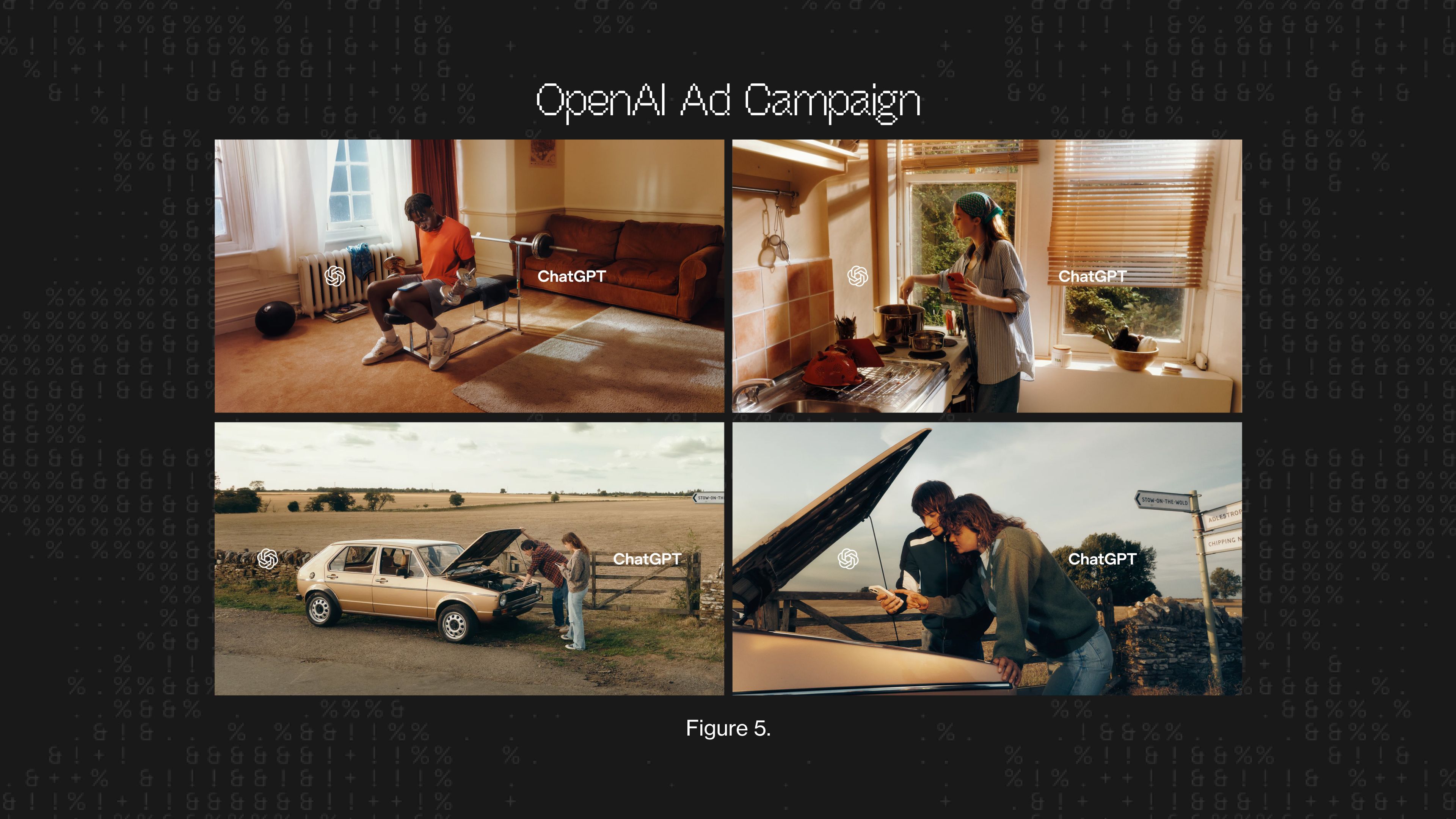
Figure 5: It’s Nice That
CMO Kate Rouch's justification: "This is a celebration of human creativity and an extension of human creativity," which is why the company opted not to use AI in the creation process. Translation: when OpenAI's reputation was on the line in front of 200+ million viewers, they didn't dare use their own products.
The message couldn't be clearer. The world's leading AI company—with tools specifically designed for video generation and creative work—hired traditional human production teams when it actually mattered. If OpenAI doesn't trust AI for their most important marketing moment, why should anyone else?
Let's be clear: we're not against OpenAI. There's controversy around many players in the industry, but at the end of the day, these models are simply tools. We use this example to help alleviate the anxiety you might have about being replaced. Human creativity will always be needed, especially when brand equity is on the line. OpenAI's choice to use human creatives for their campaigns perfectly illustrates this point.
How to Get Ahead with What AI Will Never Have
So what do you do? The human designer with embodied experience, genuine agency, and the ability to care. We’re struggling with the same dilemma, but below are a few tips that have significantly helped us find ways to harness these new tools alongside our creativity…
First, adopt an experimental mindset. Research confirms that viewing creativity as developable rather than innate leads to better creative outcomes. Experimentation shifts you from habitual patterns and fosters exploration of unconventional ideas. Here's the key insight: set creative boundaries, then systematically break them. Every "failure" is data collection, not an endpoint. This isn't about being reckless—it's about treating each project as a chance to learn something new about your craft. We will be writing an in-depth article on what this truly means, but for now check out this Big Think in-depth interview with world-renowned neuroscientist Anne-Laure Le Cunff.
Second, follow your curiosity. One of our favorite artists and generational music producers, Rick Rubin, says it better than anyone else. Rick Rubin emphasizes that following your curiosity is essential for creativity and success. He suggests maintaining an open, beginner’s mind—a childlike state of wonder and openness without rigid beliefs—to fully engage with what genuinely interests you. Rubin believes that curiosity drives creativity by encouraging exploration, play, and asking questions, which leads to innovative ideas and fruitful outcomes. He highlights that the work created from curiosity reflects who you are and that staying true to your inner guide rather than external expectations is key.
Third, get inspired by human designers. When AI-generated content all starts looking the same, the work that stands out is what human vision creates. Check out Ry.OS—that's creative vibe coding with personality and intention you can feel in every interaction. Visit Gizem Akdag's portfolio—AI-infused art that couldn't exist without human direction, cultural awareness, and that irreplaceable sense of taste. These aren't designers being replaced. They're designers wielding new tools while retaining what matters: vision, intentionality, cultural awareness, and human touch. One of our favorite designers who has done an incredible job facilitating and highlighting the global design community, Tommy Geoco, calls these types of creatives “tool-benders.” The simple message here is to find designers whose work makes you want to create more. Let their ambition raise yours.
Closing Thoughts
We've spent years in enterprise environments watching companies cycle through technology hype. It’s all familiar except we are witnessing the release of tools that will quickly change the course of humanity. It’s easy for the companies building these technologies to fuel the hype since it directly benefits their bottom line. This article aims to change your perspective on how fast this change is actually happening, what makes you distinct as a human, and how to position yourself for a more fruitful future. Let’s recap some of the core concepts…
Your creativity isn't threatened by AI. It's validated by AI's limitations.
Even though philosophers differ on their worldviews, researchers building AI admit it can't reason or plan novel ideas with abstract reasoning.
The brands that bet on AI alone face backlash and failure. Even OpenAI needs humans when their reputation's on the line.
So keep designing. Keep caring about your work. Keep bringing your embodied experience, your cultural position, your ability to give a damn to everything you create. The future of creativity isn't human or AI. It's humans wielding AI while retaining what machines will never have: consciousness, agency, intention, and soul.
What's Next
In our next episode, we'll explore "The Creative AI Framework: Making Sense of the Design Future"—introducing a comprehensive framework that maps how creative work is evolving across design verticals, creative potential, and code abstraction layers.
We'll show you:
The industry trends that matter for creatives
How creative potential collides with design and code
Differences between natural language and specification
A future-proof framework regardless of which new AI tools emerge
Let’s Connect
If you found this useful, subscribe to our newsletter on Medium or Substack.
Want to see this in action? We're breaking down specific workflows, tools, and techniques on YouTube and Instagram.
Interested in working with us? Check out our website and contact us—we'll respond within 24 hours.
About the Authors
Karim Bouhdary is a creative technologist and designer who bridges the gap between design and engineering. He has experience working on cutting-edge UX projects at companies like Google, SAP, Salesforce, and more. Karim specializes in helping organizations leverage emerging technologies to unlock new creative possibilities. His work spans all modes of design, motion graphics, 3D rendering, and interactive experiences.
Morgan MacKean is a strategist and creative director focused on the intersection of design, technology, and brand identity. Morgan helps enterprises and startups navigate their visual identity with AI-augmented creativity, translating ideas into empowering visual design.
Together at OPEN SESSION, Karim and Morgan work with forward-thinking organizations to expand their creative capabilities, implement AI-powered workflows, and build systems that amplify human creativity rather than replace it. Their approach combines hands-on technical expertise with strategic vision—helping teams move from theory to execution.
— Our mission: help the world make the most of design and technology
Thoughts, ideas, and perspectives on design, simplicity, and creative process.